 PIXEL
PIXEL

I mine Bitcoin at home. And I show you how.
I have been mining since 2017, and since 2020 I have been sharing everything on YouTube: what I buy, what works, what fails, and what it costs. The videos are in French, with subtitles. No need to be an engineer, I am not one either.
NewMy latest video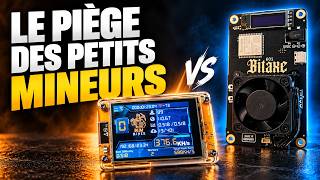 Ce mineur Bitcoin mettra 54 milliards d'années à trouver un blocPublished 22 September 2026, in French · 1,140 VIEWS
Where to start?
Three videos, in this order. The path I wish someone had handed me at the start.
- Understand
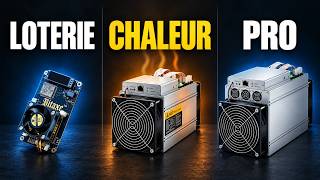
Is home mining still worth it in 2026?
The honest math · 3,145 VIEWS - Get started
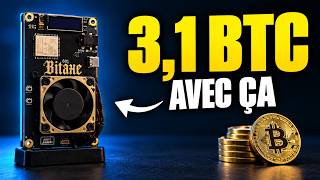
They found a Bitcoin block with a tiny miner…
Yes, it happens · 999 VIEWS - Go further
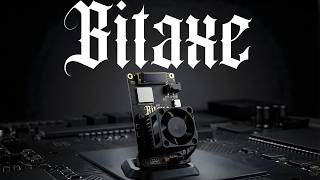
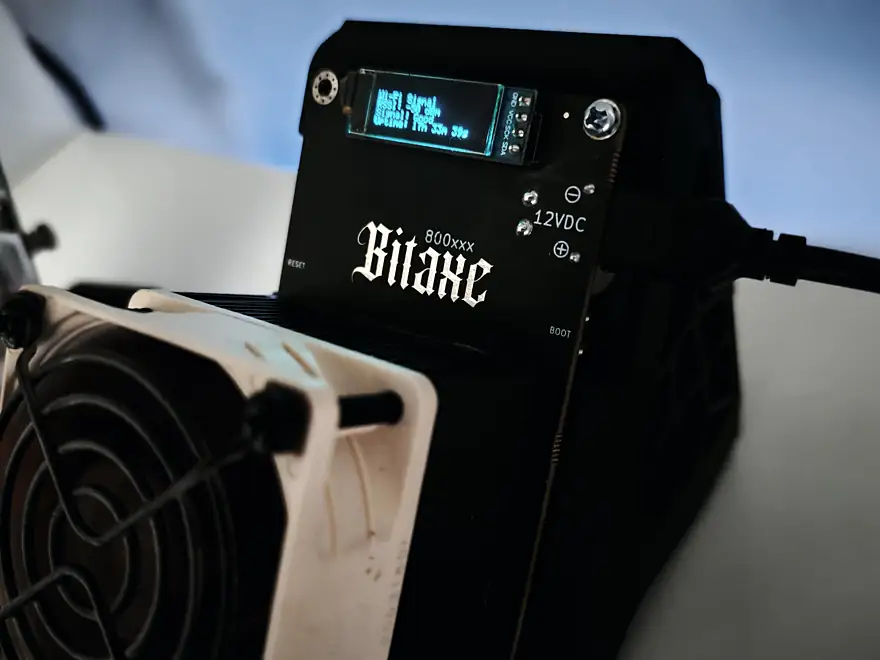
Bitaxe in 2026: understanding the open-source Bitcoin miner
The complete guide · 5,090 VIEWS
- Set up a Bitaxe, step by stepFrom unboxing to the first share sent to the pool.
- How much does a Bitaxe earn?The honest math: average earnings, electricity and jackpot odds.
- Which miner for home mining?Hashrate, electricity, noise: the criteria that really matter.
- Solo mining on FindMyBlockUnderstand solo mining, set up your machine and follow your odds.
My timeline
None of this was planned. Every step came from a question I could not answer with what already existed.
My projects
Two projects born from my own needs: a free pool, and a shop coming soon.
my solo mining pool
It started as my own private pool. I opened it to the public in July 2025 to make solo mining simple enough that it becomes a way into Bitcoin. With challenges and leaderboards, to make the wait between blocks a little less quiet.
Set up my machine, in 3 steps
Plug in your machine
Bitaxe, NerdQaxe, Avalon Nano or anything that speaks Stratum. Open its settings page in your browser.
Paste these settings
EU serverstratum+tcp://eu.findmyblock.xyz:3335Rentalsstratum+tcp://eu.findmyblock.xyz:3336Usernameyour Bitcoin address, a dot, your worker namePasswordxFollow your machine
On findmyblock.xyz, type your Bitcoin address: you see your hashrate, your best attempts and your place on the leaderboard.
How it works under the hood
FindMyBlock is not open source. Its core comes from Public Pool, Benjamin Wilson's free software project. Non custodial: the pool never holds your bitcoin, every machine mines straight to the chain, and the reward goes to your address without passing through me.
opening soon
It will offer what I make: stands, adapters, custom cases and cooling parts, designed for home miners. Tell me what you would use, it will help me decide what to release first.
In the catalogue
Understanding solo mining
Why do I compare mining to a lottery? Roughly every ten minutes, the network looks for a number. The first machine to land on it writes the next block and wins the jackpot. Solo means all or nothing. Here is the current draw, live.
Winning numbers of the last draw
The orange cells are the zeros required at the start of the fingerprint. This draw needed … zeros.
And with your machine?
Approximate manufacturer hashrates, Bitcoin network measured live.
Why I keep going
On paper I should switch it all off. But the heat is not wasted: it warms the room in winter. The node is not pointless: it is a piece of the network nobody can censor. And a build that goes wrong teaches me more than ten articles.
Six pools produce more than 80 % of all blocks. Every machine switched on in someone’s home is one more participant nobody controls.
My hardware
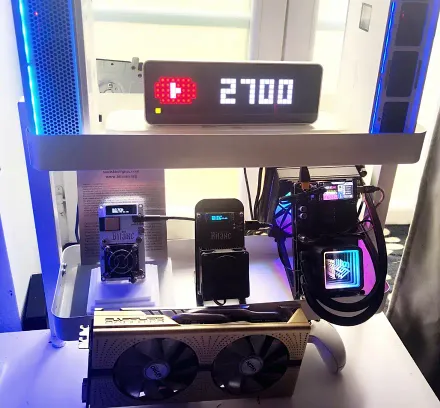
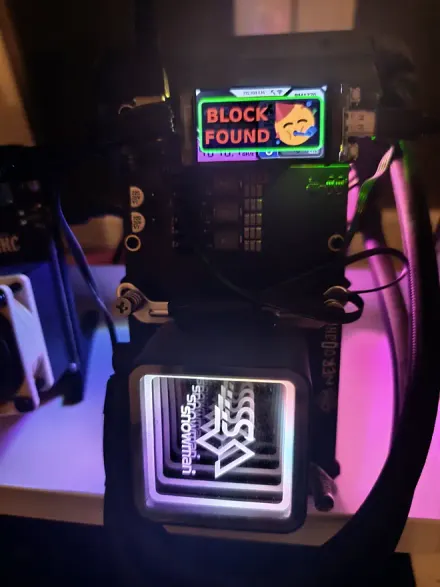
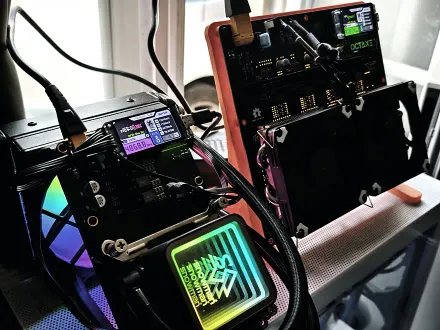
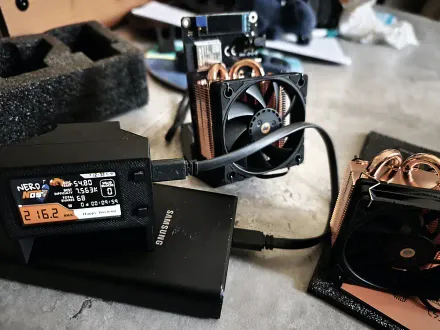
Hover to see the real colours.The photos get their colours back as they reach the middle of the screen.
The full shelf
My reviews, measured at the wall
- Thor X1 review: the first BM1373 chip at homeThe best efficiency I have measured on a desk miner, with closed software.
- NerdOctaxe review: 8 BM1370 chips on a deskTwo NerdQAxes in one case, close to 10 TH/s, for enthusiasts.
- NerdQAxe++ Hydro review: the water-cooled mini minerFour chips, pre-assembled liquid cooling, and office-level noise.
The channel and the pool are free. The servers, the electricity and the test machines come out of my own pocket. That is not going to change.
Support me
None of this is required. But if you would like to help, here is what actually makes a difference, from the easiest to the most generous.
Free, in ten seconds
- Subscribe to the channelIt is free, and it is what matters most for YouTube to recommend my videos.
- Like or comment on a videoOne word is enough: every comment helps the video reach more people.
- Share a videoWith someone who wonders how Bitcoin works. That is how the channel grows.
- Join the DiscordAsk your questions, share your settings, help people who are starting out.
Partner codes
Planning to buy hardware? Use these links or my codes: you pay less, and the shop gives me a small commission. That is what pays for the machines I test in my videos.
European mining hardware shop based in Ireland: ASICs, small miners and accessories.
Maker of home miners, including the Luckyminer and Luckyaxe ranges.
Hardware wallet to keep your bitcoin yourself, offline, instead of on an exchange.
Tip, optional
If something here was useful to you, this address exists. It unlocks nothing in return.
bc1p23zqga4jxvl09l4kpf0lxx8aprxmx2me8677h2nq3655jnh8qfnq7r2j0j
Work together
Are you a brand or a shop in the mining world? Here is what the channel is about, and how to reach me.
What I offer
- Hardware reviews: the machine set up at my place, in real conditions, with its strengths and its flaws.
- Product showcases useful to home miners.
- Partner codes and links, like the ones in the Support section.
Every collaboration is clearly disclosed in the video, as French law requires.
Get in touch
Got a question? Discord is fastest, several of us answer there.
Frequently asked questions
How much power does a small miner use?
A Bitaxe draws about 15 watts, roughly a light bulb. Bigger models draw more: the NerdQaxe++ in my photos runs at around 80 watts.
Which miner should I start with?
A Bitaxe: open source, small, and the one I use in my guides. Everything is explained in the video Bitaxe in 2026: understanding it all (in French, with subtitles). To compare machines: Which miner for home mining?
Is it profitable?
No, not solo with a small machine: on average the electricity costs more than it earns, and finding a block remains a lottery. I talk about it openly in Is home mining still worth it in 2026?. The detailed math: How much does a Bitaxe earn?
Does the pool keep my bitcoin?
No. FindMyBlock is non custodial: if your machine finds a block, the reward goes straight to your Bitcoin address without passing through me.
Do I need a Bitcoin node to mine?
No. To mine on FindMyBlock you only need a machine and a Bitcoin address. Running your own node is one more step towards depending on nobody.
Do I need to be an engineer?
No, I am not one. Plugging in a Bitaxe and pasting three settings is enough to start; the rest you learn along the way, and the Discord is there for questions.
Glossary · on the back of the ticket
- Block
- A page of Bitcoin's big ledger. A new one is written roughly every ten minutes.
- Fingerprint (hash)
- A 64-character code computed from the block. Impossible to predict: you have to try.
- Difficulty
- The number of attempts needed on average to find a block. It adjusts itself every two weeks. Difficulty explained
- TH/s, PH/s, EH/s
- Attempts per second: a trillion, a quadrillion, a quintillion.
- Pool
- A server that machines connect to. A regular pool shares the winnings, a solo pool does not. Solo or pool?
- Solo
- Mining for yourself alone: the whole jackpot, or nothing. Solo mining
- Bitaxe
- A small open-source Bitcoin miner, perfect to start with. Set it up
- Stratum
- The language machines and pools speak.
- Node
- A computer that keeps a full copy of Bitcoin and checks every block.
Solo mining is a lottery.
Not investment advice.
Block 0 · 3 January 2009
Guides · Reviews · Back of the ticket: legal notice, privacy, terms